Be About God
In HIs IMage. For His Purpose. That's why life matters.
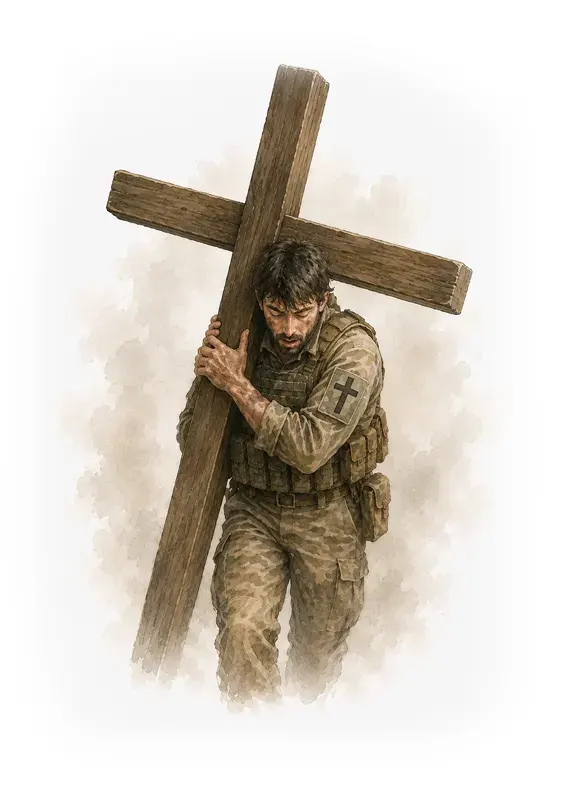
The Christian Mission—The Battle Between Self and Surrender
There is something within me—and within all of us—that stands opposed to God. Whatever stands opposed to God is evil, and every human being carries it. This is part of why the nonbeliever rejects God, and part of why even the Christian struggles to live the abundant life Christ speaks of. If you do not believe me, consider this.
In the Gospel of John 15:5, Jesus says: “I am the vine; you are the branches. Whoever abides in me and I in him bears much fruit, for apart from me you can do nothing.”
In simple terms, this passage is telling us that our lives are meant to be about God.
And what that means is this: a branch cannot live apart from the vine. It is not designed to. In the same way, we are not designed to live apart from God. God did not come to us so that He could simply be part of our lives, nor did He come merely to invite us to be part of His as an addition. He came so that we could have life—because He is life.
So as a branch lives from the vine, we are to live from God. We are to live for Him. To glorify Him through submission, through turning from sin, through obedience, and through following His commands. Apart from Him, we can do nothing. Apart from Him, the branch dies. We are to be about God.
And when I say “rooted,” I mean saved. We do not do these things in order to be saved—we do them because we have been saved.
God is not something we place at the top of a list of priorities. We ourselves, apart from God, are not even on the list in the way we tend to think. We are called to deny ourselves completely and to live by His Spirit, not our own. To abandon independence. To live fully dependent on God. To live for Him, by His ways, under His leading, for His glory.
God’s Word was not given merely so we could learn how to live our “best life.” It was not written simply to make us more successful, more fulfilled, or even just better spouses, parents, friends, or people. And while following God’s wisdom does shape those areas, that is not the ultimate purpose of Scripture.
“We were not created to have God as part of our lives; we were created to find our life in Him.”
The Bible was not given so life could stay centered on us while God helps improve it from the side. It was given to show us that God Himself is better, sufficient, and worthy of our entire lives.
There are people who may outwardly prosper by following principles found in Scripture, yet still remain far from God. So the goal of Scripture is not simply moral improvement or a better life. It is reconciliation with God Himself.
The Bible was written so that we would come to know God, walk with God, follow God, and be about God. It teaches us to live in His ways so that every part of our lives points back to Him and brings Him glory.
Throughout Scripture, we are repeatedly shown that the Christian life is a kind of battle. Paul uses this language often. In Second Timothy 2:3–4, in Ephesians 6:11–17, in Philippians 2:25, and in Second Corinthians 10:3–5, we see the imagery of warfare used to describe what it means to follow Christ.
And a soldier—if he truly believes in the cause he serves—does not live centered on himself. He sets aside personal life: desires, preferences, opinions, ambitions, even comfort. He allows himself to be trained, shaped, and disciplined for the mission before him. He learns to submit, to follow orders, and to trust his commanding authority. He no longer directs his own steps, but yields himself to the purpose he has committed to serve.
In the same way, if a Christian truly believes in God, they are willing to set aside their personal life—desires, preferences, opinions, ambitions, even comfort. They are willing to be shaped, pruned, and trained by God in the disciplines of faith. They learn to submit, to follow, to trust God’s authority. They stop directing their own steps and begin yielding themselves fully to His purpose.
The soldier must be all about the mission.
And what many do not realize is that being God’s “soldier,” in this sense, is one of the ways He forms us into the image of Christ. And if we are being formed into the image of Christ, then we are being formed into who we were truly created to be—people who reflect God in character, love, and purpose.
From that place, we do not lose ourselves. We become what we were meant to be. We grow into better sons, daughters, parents, friends, and people—not by centering everything on ourselves, but by centering our lives on Him. That is the direction that leads to true life, regardless of what this world brings.
A soldier who is focused on the mission, disciplined in training, attentive to instruction, and committed to obedience becomes effective and strong. But a soldier in the middle of battle who becomes focused on himself instead of the mission becomes vulnerable. He becomes easily overcome. He becomes a casualty of distraction. In the same way, many Christians struggle because they remain focused on themselves instead of fully stepping into the call of belonging to God.
In the end, the call of the Christian is to give God all the glory and to live wholly for Him with everything we are. Our opinions, ideas, thoughts, desires, and longings are meant to be laid down before Him in exchange for His will and His way.
Yet this is where something within us resists. Because surrender can feel like loss. It can feel like we are becoming less important—as if our lives no longer matter, not even in the background.
And so we begin to resist that idea.
We begin to want a version of faith where God affirms our desires, validates our plans, and supports our sense of control. We want to feel that we still hold the steering wheel, even if God is present beside us.
But there lies the tension. Because the truth is, we do not hold that place.
Anything we build apart from God cannot hold the weight of what we are trying to make it. And anything that pulls us away from Him pulls us away from the life we were created for.
So ask yourself this: if God is truly God—omniscient, omnipotent, omnipresent, fully sufficient, perfectly wise, and full of love—then what exactly do we lack in Him?
What could we add to Him that He does not already possess?
What insight could we offer that He has not already known from eternity?
What place do our opinions hold before perfect wisdom?
It is like someone with no understanding of painting or music standing before a master and insisting they can improve the lesson. It does not elevate the student—it only reveals misunderstanding. In the same way, what do we think we can add to God?
And so the question remains.
Can you accept this reality?
Can you lay down yourself—your plans, your desires, your control—and give it all to Him?
Can you give Him all the glory in every part of your life?