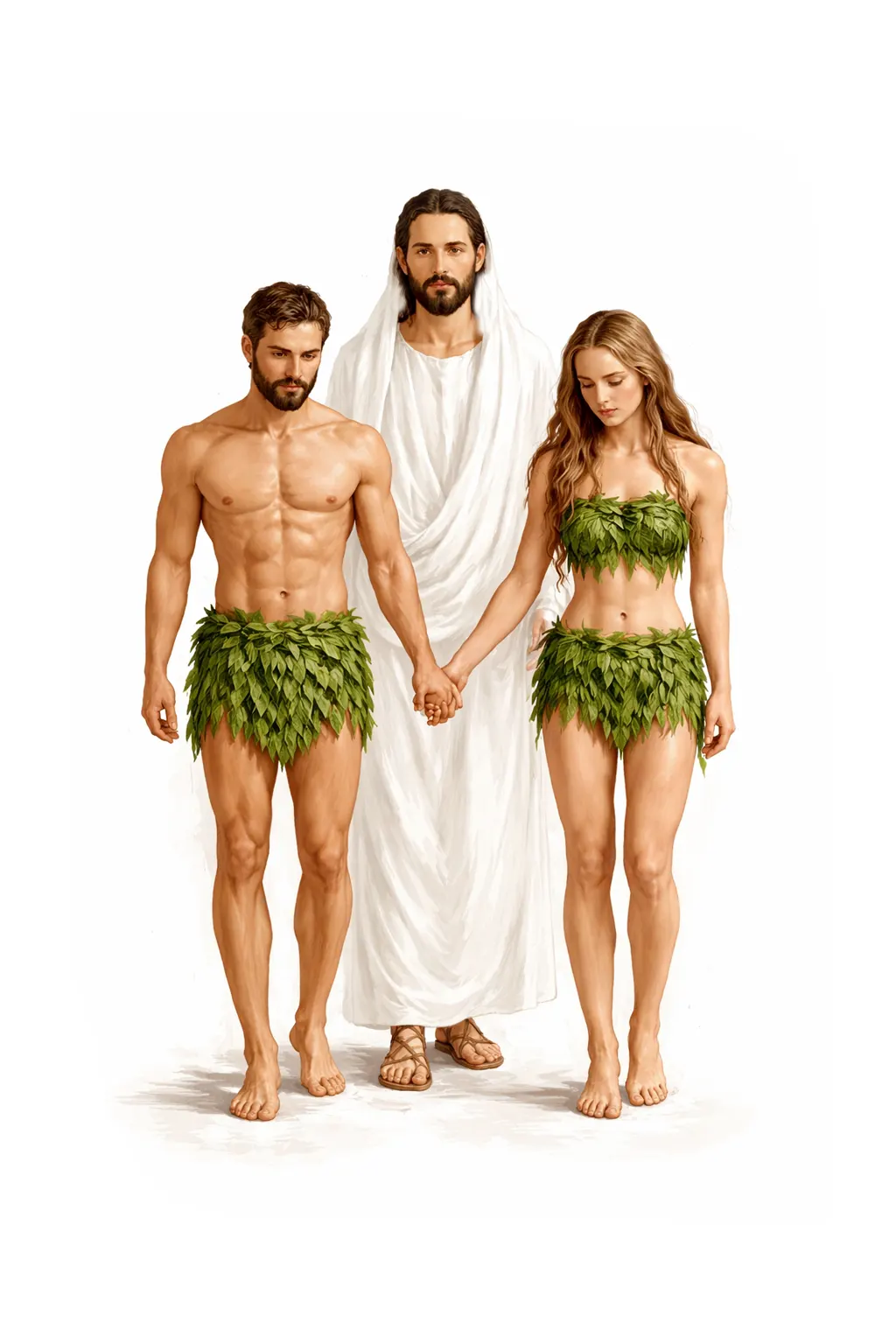
Adam and Eve
The Fall of Humanity
The story of the Fall of Man raises many difficult questions. Why did God allow Satan to exist? Why place the tree of the knowledge of good and evil within reach of Adam and Eve, where it could be so easily desired?
These questions often focus on God’s role—yet rarely do we ask why Adam and Eve chose to eat from it.
Let’s take a closer look at this account and explore the deeper truth behind it.
Our Destiny
First, we need to understand an important truth that is often overlooked: God is all-knowing. He knew what Adam and Eve would choose, just as He knows the course of all humanity. Nothing in this story caught Him by surprise—there was never a moment when events unfolded outside of His awareness, as if life in the garden might continue untouched forever.
With this in mind, we begin to see something deeper: from the very beginning, God already had a plan in place.
Why?
Let’s take a moment to address the questions many people carry.
Satan
Why did God allow Satan to exist and to tempt Adam and Eve? Scripture shows us that God is able to work all things for His purposes—even what appears, from our perspective, to be evil. Satan’s rebellion did not take God off guard; it became part of a greater design, opening the door for a real and meaningful choice.
God was not seeking to create robots or prisoners, but a people who could freely love Him. Love, by its very nature, requires choice. And with that choice came the possibility of turning away.
God is light, and apart from Him there is darkness. Through Satan’s temptation, that contrast became visible, and humanity was faced with a decision: remain in the light, or turn from it.
The Tree of the Knowledge of Good and Evil
“And the Lord God commanded the man, saying, ‘Of every tree of the garden you may freely eat; but of the tree of the knowledge of good and evil you shall not eat, for in the day that you eat of it you shall surely die.’” (Genesis 2:16-17)
If Satan was the instrument, then the tree was the doorway. The tree itself was not evil—but it stood at the boundary between obedience and disobedience, between life in God’s presence and separation from Him.
Why would God place such a tree before Adam and Eve? It can seem, at first glance, as though He was setting them up to fail. But that question is much like asking why poisonous plants exist in a world also filled with beauty, or why anything desirable can be misused. The issue is not the existence of the thing itself, but what we choose to do with it.
Here we begin to see the tension between Creator and creation. God desires trust and love, not forced obedience. If Adam and Eve had remained close to Him—resting in His goodness—they would have had no reason to reach beyond what He had given.
Yet within us is the capacity to choose otherwise. God created us with minds to think and hearts to desire, and with that comes the real possibility of turning away. Temptation, then, is not the enemy itself, but the place where choice becomes real. It gives weight to love, because love can either remain faithful—or walk away.
We walked away, despite God’s clear warning not to eat from the tree.
The Serpent’s Deception
“Then the serpent said to the woman, ‘You will not surely die. For God knows that in the day you eat of it your eyes will be opened, and you will be like God, knowing good and evil.’” (Genesis 3:4)
Satan deceives Adam and Eve, twisting their perception so that they see God as the one holding back, as if His command was meant to keep them from becoming like Him. It is a cunning lie, because it appeals directly to human pride and the desire to be our own gods. Yet the lie is obvious: we cannot become God.
There are two profound problems with their choice to “know good and evil.” First, while God’s creation can love, think, and act, without Him we cannot do these things rightly. Our actions are corrupted, turning what is good into evil. Second, to know evil is to awaken to its reality and to become desensitized to it. It is like a child who discovers wrongdoing and realizes he can act outside the rules—once that door is opened, it becomes easier to repeat and escalate wrong.
God warned Adam and Eve that the day they ate from the tree, they would die. Satan, of course, denied it—a lie meant to deceive. But the truth was deeper than mere physical death: they died spiritually. The pure, unbroken life God had placed within them was now fractured. They became aware of impurity and evil, and from that moment, humanity was left to live in the flesh—a state far from what God had intended at creation.
Spiritual Maturity
From the very beginning, God knew that His creation would turn away from Him—it was in our nature. Like children who must grow and learn, we needed time to awaken to the truth: that God loves us, that He is trustworthy, and that true life exists only in Him.
This is the grace of God—giving us space to experience life apart from Him, to see firsthand that apart from His presence there is only chaos, conflict, unrest, and death. This was the only way creation could truly learn.
Even now, on this side of Heaven, we have the opportunity to awaken, to recognize this truth, and to place our faith in God. When we do, He restores us, placing a new heart within us—one that restrains pride and selfishness—until the remnants of our old nature are finally gone in Heaven.
The Fall of Humanity
The brokenness and dysfunction in our world exist to reveal the reality of life apart from God. Like a spiritual Yin and Yang, God allows us to see the emptiness, the lies, and the fleeting promises of this world so that we might come to recognize and cherish the true life found only in Him.
For those who return to Him and enter His kingdom, the desire to rebel, to fall for temptation, or to elevate themselves as gods will vanish. They will have encountered the one true God—and in Him, all longing for anything less is finally satisfied.