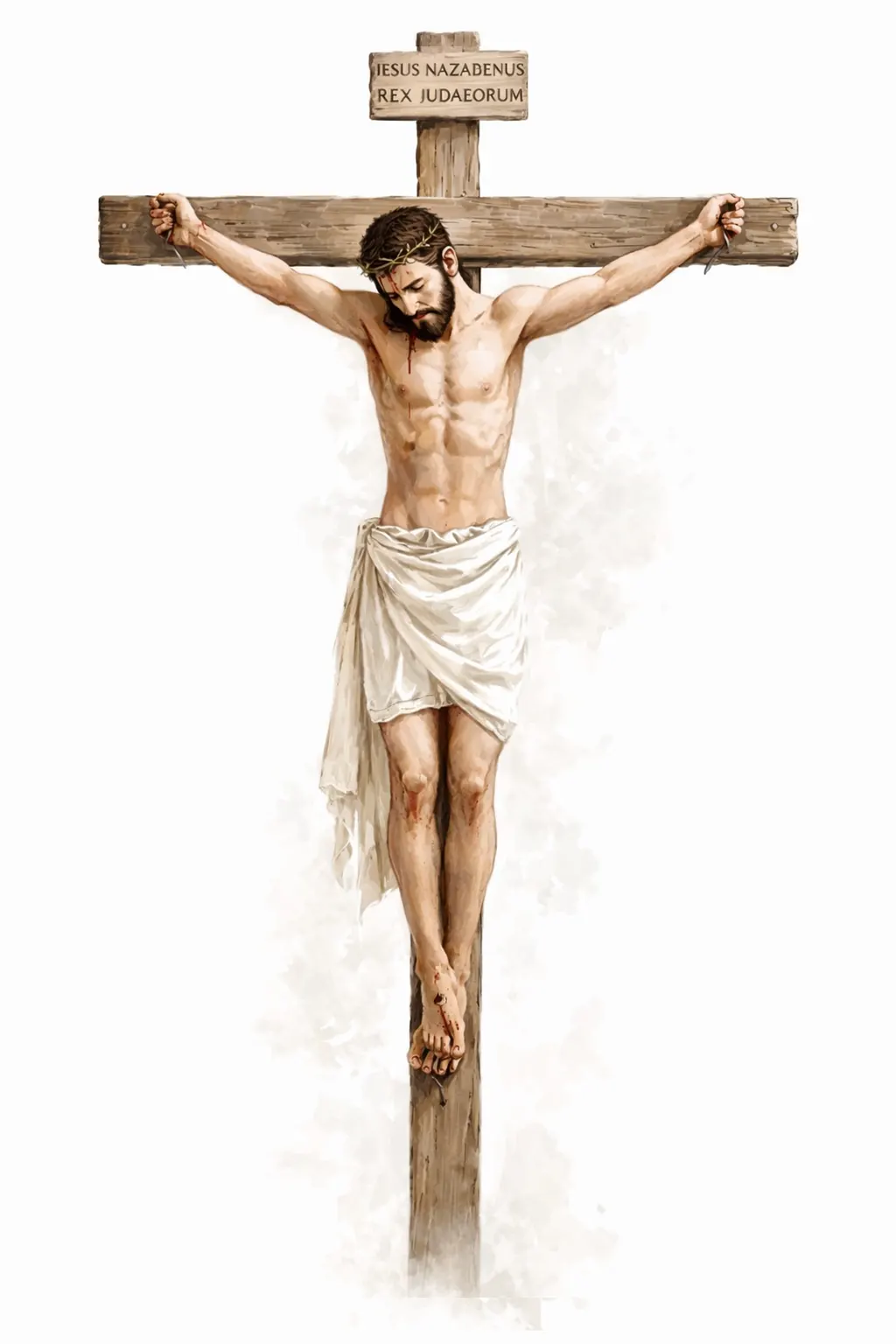
Jesus Our Savior
What Jesus Came to Save Us From
I once heard a sermon that told a story something like this:
The angels in heaven looked upon the world and said to God, “Your creation is dying. Who will save them?”
Then Jesus stood and said, “I will go and save My children.”
The angels replied, “But if You go, they will not believe You. They will reject You, hate You, and even crucify You. And many will still deny You. Why would You go?”
Jesus answered, “Because I love them.”
Of course, this is not a literal story from the Bible, nor is it meant to be taken as a matter of biblical accuracy. But it paints a powerful picture of the heart of the gospel. And it causes us to ask the question why did Jesus come to save us?
Adam and Eve represented all of humanity. If any one of us had been in their place, we would have done the same—we would have rejected God. It is in our nature. As Romans reminds us: “There is no one who seeks after God, no, not one.” (Romans 3:11)
But the true gravity of what we did is almost unimaginable. Rejecting God was not a small mistake—it was a catastrophic choice that shattered the very design of life. It’s as if we dove into deep, unbreathable water, believing we could survive on our own. The reality is stark: without God, we cannot live. Every moment apart from Him is a slow, inevitable death, because apart from Him, we lose the very breath of life.
Jesus said, “I am the vine, you are the branches.” (John 15:5) A branch cannot live apart from the vine. By severing ourselves from God, we corrupted His divine creation. We unleashed sin, decay, and brokenness into the world. We rejected truth, love, and the foundation of all that sustains life.
In doing so, we tore apart all that was meant to be right, pure, and holy. We left ourselves withering, rotting from the inside out, dying spiritually, emotionally, and morally. The rebellion of humanity is not a minor flaw—it is a cosmic fracture, a wound in the very heart of creation. And in the end, it caused the life of Jesus Christ.
God sent Jesus to save us—but how would He accomplish this?
Jesus left the pure holiness of Heaven and stepped into the polluted, broken world we had chosen. He came to show us what the Kingdom of God truly looks like and to invite us into the life, light, and family we were always meant to belong to.
He came to live the life we could not live—a life of perfect relationship with God. The perfect branch connected to the vine. He revealed the love of the Father, taught the ways of the Kingdom, and offered grace to all, coming not with condemnation, but with an open invitation: “Come home to your Father.”
Because He lived a perfect, sinless life, Jesus alone was able to pay the debt for the grave sins we have committed—and those we will commit. Though we nailed Him to the cross, He willingly took our place and bore the punishment for our rebellion, paying the price we could never pay ourselves.
This is not merely a distant theological truth or a historical event. Throughout His ministry, Jesus entered into the brokenness of real human lives, confronting the deep spiritual thirst caused by our separation from God.
One such moment occurred when He met a woman at a well—someone weary from her past, burdened by shame, and searching for fulfillment in things that could never truly satisfy. In that encounter, Jesus revealed that the deepest crisis of the human soul is not social, emotional, or circumstantial, but spiritual. It is the thirst that comes from being cut off from the source of life.
In speaking to her, He was also speaking to all of us. And through that moment, He asks each heart the same searching questions today:
Are you tired of trying to survive on your own?
Are you weary of relationships that can never satisfy?
Are you exhausted from living in a world that leaves you empty, longing for something more?
Are you tired of sin and shame in your life?
Do you want more than just to exist… more than simply to survive until you die?
Do you want a real-life—abundant, overflowing, connected life?
Do you, the branch, want to return to the vine?
The Invitiation
Adam and Eve became branches severed from the Vine—Jesus. Because all humanity comes from them, every branch connected to them was also cut off, left to wither, decay, and die apart from Him. Yet Jesus calls us back to the Vine, inviting us to reconnect with God through Him. When we recognize that we cannot truly live without Him, that our rejection of God was a catastrophic choice that shattered the very design of life and brought sin and death into the world, and understand that our sin required Christ to die for us, a genuine desire to return to God arises. This realization leads to repentance, seeking forgiveness, and humbly asking God to save us.
Yet Jesus calls us back to the Vine, inviting us to be restored to God through Him. When we come to see that we cannot live without Him—that our rejection of God was a catastrophic choice that shattered the very design of life and brought sin and death into the world—and when we understand that our sin required Christ to die for us. If a deep desire to return to God is awakened within us, it would lead us to repentance, to seek forgiveness, and to humbly ask God to save us.
But the cross was not only an act of justice — it was an act of unimaginable love. Jesus did not come reluctantly, nor was He forced into suffering. He came willingly, knowing the cost, knowing the rejection, knowing the agony that awaited Him. He stepped into our darkness not because we deserved rescue, but because His love would not allow Him to leave us to perish. He saw humanity drowning in sin, withering in separation, and dying without hope — and He chose to enter that suffering to bring us life. His love is not a distant feeling or a passing emotion; it is a relentless, sacrificial love that moved Him from heaven to earth, from glory to the cross, so that we might be forgiven, restored, and brought home to God.
Evidence for Jesus | Who Is Jesus? | Who Did Jesus Say He Was? | Who Was Jesus In The Old Testament? | Jesus Our Savior | The Way Jesus Spoke