The Institutional Church
The body of Christ
The Institutional Church’s Beginnings
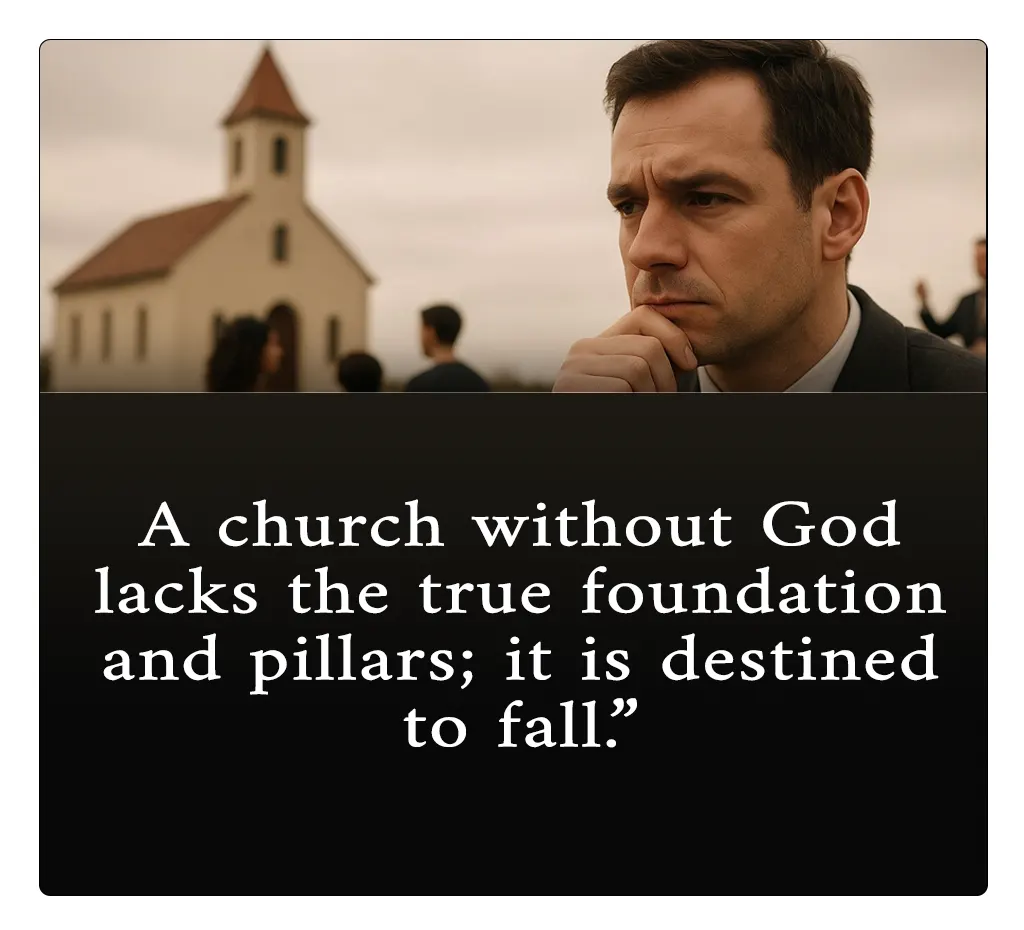
At some point—whether out of good intentions, a desire to please people, or the pursuit of prosperity—the Church drifted. In doing so, it lost both its faith and its purpose, shifting from God’s Church, the living body of Christ, into an institutional church—a man-made creation under human control.
“Unless the LORD builds the house, those who build it labor in vain.” (Psalm 127:1)
Forgetting That God Builds the Church
It takes faith to believe that God Himself builds and sustains His Church. Yet many in ministry operate as though the Church’s survival depends on their own strategies. Fearing decline, they focus on attracting and keeping people at any cost. This mindset has led to seeker-friendly methods—catering to preferences, enabling comfort, and pleasing people rather than God. Instead of relying on the Spirit’s power, they turn to worldly tactics: marketing, entertainment, and enticing people with food and events.
“I will build My church, and the gates of Hades shall not prevail against it.” (Matthew 16:18)
Rather than trusting God to draw people into His Church, the institutional church throws its doors open indiscriminately—to the saved, the unsaved, and even the hostile. And yes, crowds may gather, seats may be filled, but now comes the dilemma: how to sustain what they have built.
A Church Built Like a Business
When you build a restaurant—or any business—customers come expecting to be served. Build a church the same way, and people will come with the same mindset: to be catered to. That is exactly what the institutional church has sold: comfort, convenience, and entertainment. And because that is what was promised, that is what people demand.
The result? Churches exhausting themselves to keep consumers satisfied, because that is what they were built for from the beginning.
The Priorities of the Institutional Church
Everything the institutional church does centers on keeping, attracting, and motivating people. Intentions replace God’s direction. Leaders are chosen not for a true calling from God but for credentials, polish, or popularity. Pastors are sought who appear knowledgeable, charismatic, engaging, attractive, and respectable—qualities that impress people but bear little resemblance to the servants of Scripture.
Of Jesus, Isaiah foretold: “He had no form or majesty that we should look at Him, and no beauty that we should desire Him” (Isaiah 53:2). And of Paul, some in Corinth remarked: “His bodily presence is weak, and his speech of no account” (2 Corinthians 10:10).
Programs Over Christ
And the catering doesn’t stop there. People with little or no faith often arrive burdened with problems, expecting the church itself to provide answers. Instead of pointing them to Christ—the only true source of healing and help—the institutional church steps in as problem-solver. Programs are created: small groups, counseling sessions, service opportunities. These may look helpful, but they often foster dependence on the church instead of dependence on Christ. People remain in cycles of reliance, while true growth is stunted.
Caught in the middle are those who come for the right reasons—to grow in Christ and to serve God. Yet they are often overlooked, overshadowed by a system built to please self-seekers. Instead of being nurtured in their faith, they struggle to thrive in an environment designed for comfort rather than commitment.
“For the time is coming when people will not endure sound teaching, but having itching ears they will accumulate for themselves teachers to suit their own passions.” (2 Timothy 4:3)
What Are We Building?
We must ask ourselves: what exactly is being built? Is the Church meant to satisfy people’s desires? To amuse and entertain? To create comfort and cater to preferences? To function as a family program, a therapeutic center, a school, or a social club?
No.
The Church was meant to be a gathering of born-again believers—those who have found every answer in Christ and long to grow in the love they have received. They come knowing they have been saved by Christ, served by Him, and now gather with hearts ready to serve, not be served. They are willing to lay down their lives because Christ laid down His life for them.
The Church is not for entertainment, therapy, or social activity—these are already found in Christ. Instead, believers gather to be His body: His hands and feet, His soldiers, ready to run the race, fight the good fight, and glorify God with their lives.
“Now you are the body of Christ and individually members of it.” (1 Corinthians 12:27)
The Objection
Some may criticize this description of the Church, arguing that new believers—still young in their faith—cannot yet reflect such maturity. They need time to grow, to learn, to discover their place in God’s house. And that is true. But ask yourself this: how can they grow in a church that is faithless, institutional, and powerless?
Built for the Flesh
Do you know what the institutional church is built for? It is built for the flesh. That is why it looks like the world and smells like the world—because it was designed to serve man, not God. It is self-focused, weak, and faithless, trapped in a bubble of its own making. Its leaders fear losing people, losing money, facing lawsuits, enduring persecution, or being rejected. The result is a church that appears dim, divided, and counterfeit.
This is not God’s Church.
This Is God’s Church
“They devoted themselves to the apostles’ teaching and the fellowship, to the breaking of bread and the prayers. And awe came upon every soul, and many wonders and signs were being done through the apostles. And all who believed were together and had all things in common. And they were selling their possessions and belongings and distributing the proceeds to all, as any had need. And day by day, attending the temple together and breaking bread in their homes, they received their food with glad and generous hearts, praising God and having favor with all the people. And the Lord added to their number day by day those who were being saved.” (Acts 2:42–47)
This was the true Church—devoted, united, sacrificial, and filled with God’s power. Its light shone brightly, and the world could not ignore it.
The Contrast
But what does today’s institutional church look like to the world? It polishes itself to appear attractive, using strategies, programs, and spectacle to draw crowds. Yet in doing so, it often obscures Christ Himself.
If we truly want to build God’s Church, we must return to faith—faith that God Himself builds and sustains His people; faith that He will raise up servants who will give their lives for His kingdom; faith that He will add to His Church, one by one, those who are being saved.
That is the Church we are called to be. A Church that shines His light to the world. A Church that saves the lost. A Church that saves our children. A Church that saves us all.
The Defining Question
The first and most crucial question every church must face is this: Are we building for the flesh, or for the Spirit? The answer defines everything.