Members Only
The body of Christ
Rethinking the Church’s Open Invitation
I find it deeply concerning how the modern Church has embraced the idea that inviting anyone and everyone to attend is somehow a wise evangelistic strategy. It’s like a nation at war flinging open its borders and handing out weapons—regardless of whether those entering understand the mission, care about the cause, or worse, oppose it.
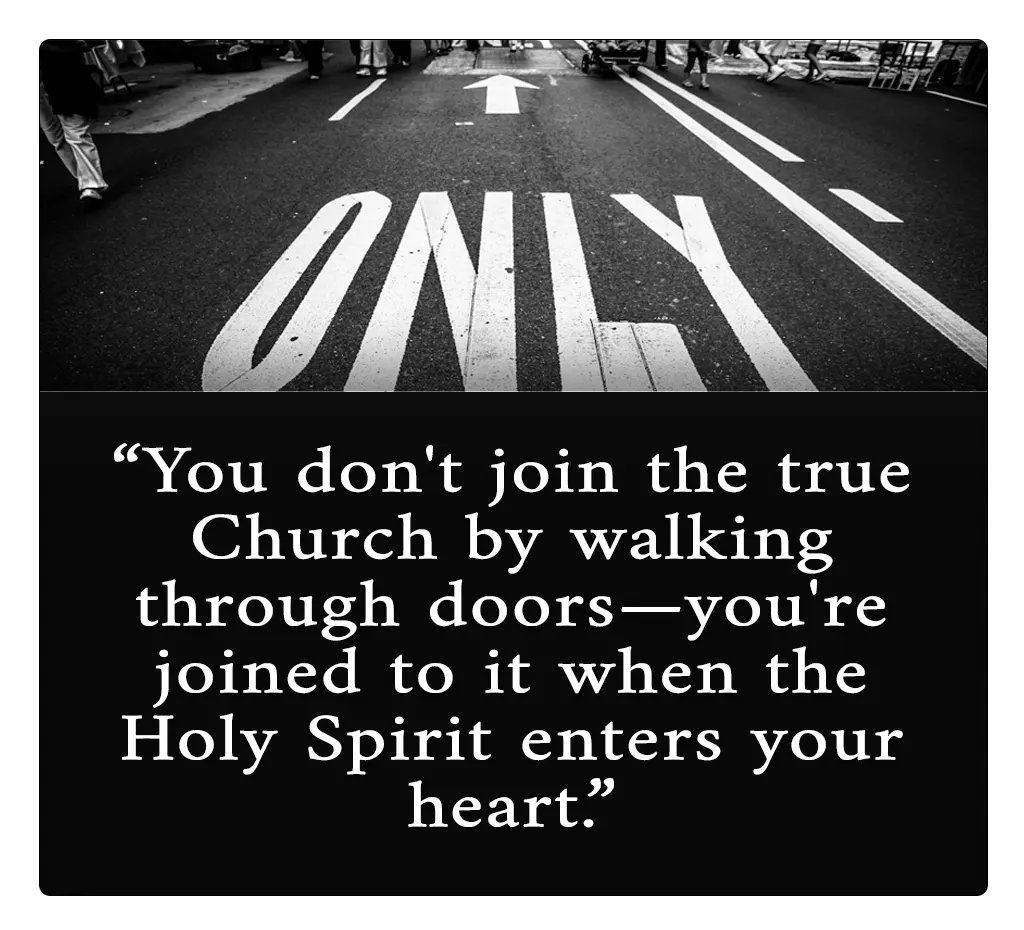
Scripture makes it clear: the only true mark of membership in God’s Church is the indwelling of the Holy Spirit. When someone is saved, they are immediately joined to the Body of Christ (1 Corinthians 12:13). From that moment, they are enlisted in God’s army, called to be His ambassadors on earth. No human institution can replicate or manufacture that supernatural reality.
This is why formal church membership—though often well-intentioned—can become problematic. Commitment and accountability are not the result of signing forms or checking boxes; they are the fruit of the Holy Spirit. When we substitute Spirit-led conviction with man-made systems, we risk misleading people about where true transformation begins.
The early Church, as described in Acts 2, was not built by committees or programs, but by the power of the Holy Spirit. Believers were unified, sacrificial, and bold—not because they joined an institution, but because they had been changed from within.
But What About Evangelism?
Some ask, “If we don’t invite unbelievers to church, how will they hear the Gospel?” It’s a fair question—but it begins with a faulty assumption: that the primary purpose of the Church is evangelism.
In truth, the Church exists to equip the saints (Ephesians 4:12). It is a place of training, transformation, and strengthening for believers—not a gathering designed for the curious or unbelieving. Evangelism happens when equipped believers go out into the world and let others see Christ alive in them.
So we must ask ourselves: is it truly easier to invite unbelievers to church in hopes they’ll encounter God, or to go out and be the Church before them—living testimonies of His truth and grace?
The Risks of Inviting the Unsaved
When churches begin shaping themselves around the comfort and expectations of unbelievers, several dangers arise:
The result is a weakened Church, where the work of the Holy Spirit is stifled and genuine transformation is rare.
So, Should We Still Invite People to Church?
Maybe—if God leads us to, but always with clarity and conviction. When we invite someone to church, they must understand that they are being invited to hear the Word of God, not to join God’s family. That invitation belongs to God alone. Only through salvation does a person become part of the true Church—the body of Christ. We are not seeking to add numbers to the church; we are seeking that God might save them—so that He alone may add to His Church.
If someone is in church but unsaved, should we make them feel welcome? God forbid that our good intentions convince a person they are part of God’s Church. This is a dangerous trap. Too often, the Church bends over backward to make everyone feel comfortable, thinking this is how they will see God’s love or find salvation. But the truth is far more serious: it can give the unsaved a false sense of belonging, weaken the faith of genuine believers, and hinder the work of the Holy Spirit. Salvation belongs to God alone. It is His Spirit who binds and keeps His people together—not our well-meaning efforts or desire to make others feel comfortable and accepted.
What’s the Real Problem?
The issue isn’t the presence of unbelievers in church, but how the Church responds to them. Too often, instead of proclaiming their need for salvation, churches soften the message to make them feel comfortable. This is not love; it is deception.
Picture trying to fight a war with soldiers beside you who don’t believe in the cause. That is the confusion created when churches prioritize seekers over saints.
What the Church Must Be
The Church is not a casual gathering of the curious. It is a holy people, set apart, Spirit-filled, and called to worship, grow, and prepare for battle.
When the Church is grounded in truth, uncompromising in purpose, and led by the Spirit, salvation happens naturally. The Gospel is proclaimed powerfully, and hearts are pierced by the presence of God.
Let us not trade that holy calling for human strategies.
Let the Church be the Church.
“But you are a chosen generation, a royal priesthood, a holy nation, His own special people, that you may proclaim the praises of Him who called you out of darkness into His marvelous light.” — 1 Peter 2:9
Institutional Membership
What do I truly lack as a member of the body of Christ that would require me to hold membership in an institution? Scripture already declares that every believer is joined to Christ and to one another (1 Corinthians 12:27). Let’s be honest—what is often called ‘church membership’ functions less as a biblical necessity and more as a system of control over members. True belonging is found in Christ, not in institutional paperwork.”