Die to Self
It Starts Here!
The Christian Path
The First and Required Step
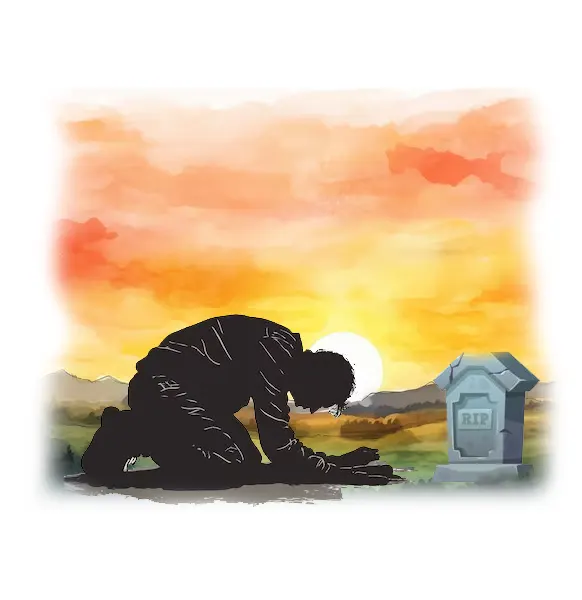
The most powerful and essential step in the life of a believer is to die to self. It is not optional, and it is not negotiable—it is a command we must obey (Luke 9:23). This is the first step, and without it, everything else in the Christian walk is weakened.
If this step is neglected, faith remains immature and unstable. There is little growth, little victory, and little assurance. Our relationship with Jesus becomes shallow, and we struggle to bear fruit or live as the salt and light God has called us to be (Matthew 5:13–16).
Instead, faith becomes easily tossed to and fro, vulnerable to the pull of the world, and drawn back into a life that Christ has already called us out of (Ephesians 4:14).
To follow Jesus is to begin here: to die to self so that He may live fully in us (Galatians 2:20).
Why the Self Is So Dangerous
The self is dangerous because it rejects the things of God in its desire to be its own god (Genesis 3:5). The self seeks control and creates its own sense of meaning apart from Him.
It is driven by emotion and the desire to satisfy its own wants above all else. The self turns inward, obeying feelings rather than truth, and pursuing what it craves instead of what is right (Jeremiah 17:9).
In doing so, it takes the attention and devotion that belong to God and turns them back onto itself (Romans 1:25).
Spirit Knows Spirit, Flesh Knows Flesh
The self cannot truly understand the Word of God because it is self-serving by nature. It takes God’s truth and bends it, turning His story into its own story. In doing so, it misinterprets Scripture, not because of a lack of information, but because of a resistance within the heart (1 Corinthians 2:14).
No amount of Bible study can transform a heart that refuses to surrender. The self ignores or rejects the parts of Scripture that confront it, call for change, or call it to die (Hebrews 4:12).
Instead, it uses Scripture selectively—grasping what benefits it while dismissing what challenges it. The self resists what threatens it because it seeks to preserve its own life, rather than surrender it to God (Matthew 16:25).
Serves Itself
The flesh seeks what pleases it, and it can even deceive us into believing those desires are godly. It distorts truth, suggesting that God exists to fulfill our wants, rather than revealing that He calls us to die to self and live for His glory (Romans 8:5–8).
True discipleship is not the pursuit of personal pleasure, but the surrender of our lives so that His purpose is made known through us (2 Corinthians 5:15).
Enemy
One of the greatest dangers of the self is its tendency to agree with Satan, because it begins to think in alignment with him (John 8:44). The flesh is easily drawn to his voice, because what he feeds it appeals to its desires. Meanwhile, Jesus feeds the spirit with truth and life (John 6:63), but the flesh resists that feeding because it does not want to be weakened or surrendered. It wants control, and it does not want the Spirit to take authority (Galatians 5:17).
In this sense, the flesh is like an artificial intelligence being programmed by Satan himself. He is the programmer, constantly feeding it input, shaping its responses, and training it to follow his lead (2 Corinthians 4:4).
When the flesh receives his lies long enough, it begins to process them as truth. It reacts based on that programming, following his direction without discernment or resistance (Romans 1:25).
Over time, it becomes conditioned by deception, operating in a kind of survival mode where its primary goal is self-preservation at all costs. In that state, it begins to act as though it is the master, unaware that it is being controlled by the very programmer it serves (Ephesians 2:2–3).
This is why the call to die to self is so essential: because anything not surrendered to Christ will eventually be shaped by what feeds it (Romans 12:2, Luke 9:23).
The Self’s Loves
The self loves the world, attention, comfort, and security (1 John 2:15–16). It resists faith, avoids struggle, and rejects anything that calls it to glorify something other than itself.
It places itself at the center of everything. It longs to be loved, catered to, and comforted, craving validation and self-importance above all else.
The Self Lives in Deception
The self lives within deception—it deceives itself and is also deceived by the enemy. Because of this, it becomes cynical and distrustful, often leading to rejection of God’s truth. It cannot believe in anything unless it works for itself.
Left unchecked, it breeds bitterness and anger, hardening the heart and pulling it further away from what is good, true, and life-giving (Hebrews 3:13).
Conclusion
This is why the call of Christ is not a suggestion but a death sentence to the old life. To follow Him is to lay down the self completely—not to improve it, but to surrender it. For only what dies to self can truly live in God. When the flesh is crucified, the Spirit is free to lead; when the self is silenced, truth becomes clear; and when the old life is surrendered, new life is born. This is the narrow path, the daily cross, and the only way into fullness with Christ. Not self-realization, but self-denial. Not self-preservation, but resurrection life in Him (Romans 6:6, Galatians 2:20).